
AI Receptionist for Electricians: Capture More Calls and Book More Jobs
September 09, 2026
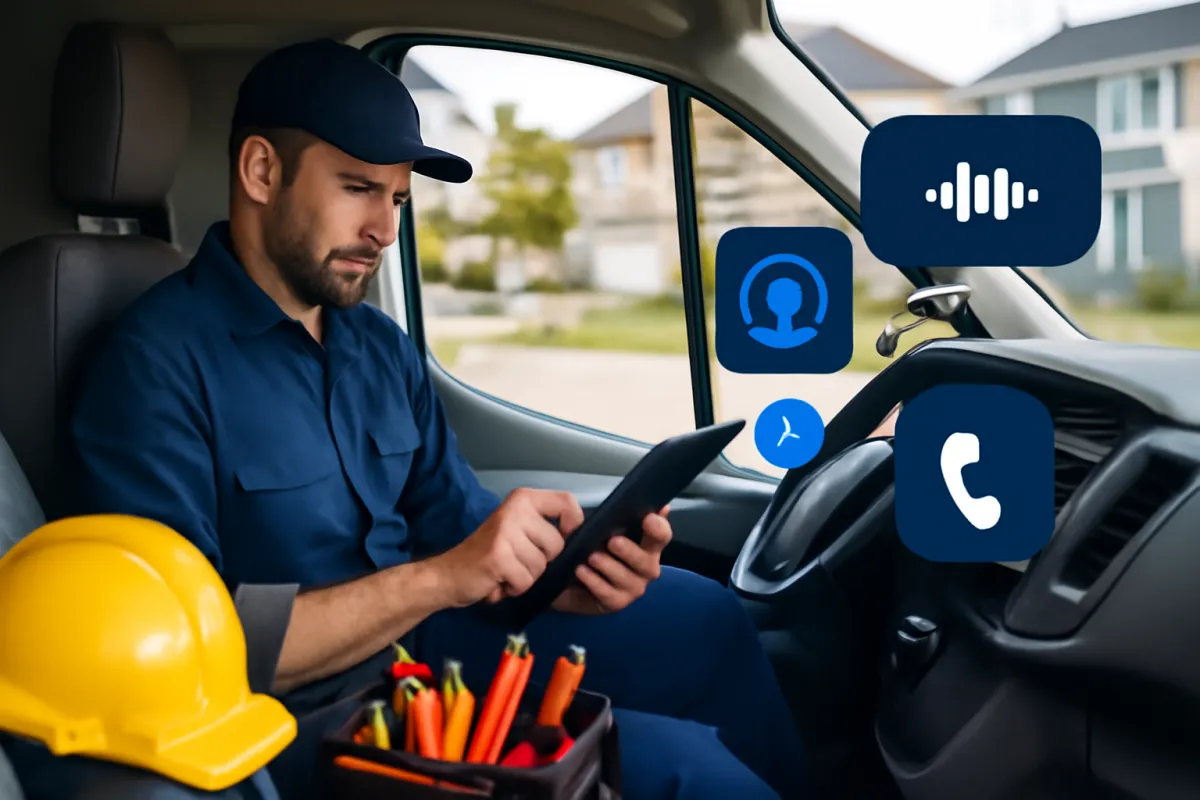
When an electrical contractor misses a call, the caller rarely waits patiently for a callback. Homeowners with a tripped breaker, burning smell, failed panel, or dead outlet often contact the next available electrician. An AI receptionist for electricians helps prevent those opportunities from disappearing by answering calls, collecting job details, qualifying requests, and scheduling appropriate appointments.
Unlike basic voicemail, an AI receptionist can hold a natural conversation and follow your company’s call-handling rules. It can support your office during busy periods, after hours, or as a first-line receptionist throughout the day. The result is a more consistent customer experience without requiring electricians or dispatchers to interrupt active jobs every time the phone rings.
What Does an AI Receptionist for Electricians Do?
An electrician AI receptionist is a voice-based system configured around an electrical contractor’s services, service area, business hours, scheduling process, and escalation policies. It can answer common questions and move qualified callers toward the correct next step.
A properly configured system may:
- Answer new and existing customer calls
- Identify residential, commercial, and property-management inquiries
- Collect the caller’s name, address, phone number, and email
- Ask what electrical issue the customer is experiencing
- Confirm whether the address is inside the service area
- Offer available appointment windows
- Send booking confirmations and follow-up messages
- Route urgent or sensitive calls to an on-call employee
- Record call summaries in a CRM or dispatch workflow
Businesses evaluating this technology can explore how AI voice agents handle calls and appointment booking before deciding which conversations should be automated.
How Electrician Call Automation Works
The best workflow is not simply “answer every call with AI.” It is a structured process that separates routine service requests from emergencies, unsupported work, and calls requiring human judgment.
1. The system identifies the reason for the call
The receptionist can ask an open-ended question such as, “How can we help with your electrical issue today?” It then categorizes the request—for example, outlet repair, lighting installation, electrical panel work, EV charger installation, generator service, inspection, or commercial maintenance.
2. It checks basic job fit
The AI can confirm ZIP code, property type, service requested, and other criteria established by the contractor. If the company does not handle appliance repair, low-voltage cabling, or work outside a designated radius, the system can explain that politely rather than creating an unusable appointment.
3. It follows a safety and escalation script
Electrical calls require careful boundaries. If a caller reports smoke, flames, sparking, electric shock, or another potentially dangerous condition, the AI should not diagnose the problem. It should deliver the contractor-approved safety message and direct the caller to emergency services when appropriate. Contractors can reference OSHA’s electrical safety resources when reviewing internal safety language, while obtaining qualified legal and safety guidance for their specific scripts.
4. It books or routes the request
For standard service calls, AI booking for electricians can present approved appointment windows and create the booking. Higher-value estimates, commercial jobs, permit-related questions, or urgent requests can be transferred or assigned to a team member for review.
5. It updates the customer record
Call details should flow into the contractor’s CRM, scheduling platform, or shared inbox. A useful summary might include the customer’s contact information, reported issue, service address, urgency, preferred appointment, and any transfer outcome.
Practical Use Cases for Electrical Contractors
After-hours service requests
A homeowner calls at 9:30 p.m. because half the house has lost power. Instead of reaching generic voicemail, the caller answers a few safety and qualification questions. Based on company rules, the system can alert the on-call electrician or schedule the earliest available visit.
Calls arriving while the team is on-site
Electricians should not have to stop work, remove protective equipment, and answer routine scheduling questions. An electrical contractor answering service powered by AI can capture the opportunity while the field team stays focused on safe, billable work.
Installation estimates
For EV chargers, ceiling fans, recessed lighting, generators, or panel upgrades, the receptionist can gather preliminary information. It might ask about property type, equipment already purchased, desired timeline, and whether the caller owns the property. The office can then review a more complete lead instead of starting from scratch.
Existing customer calls
Not every call is a new lead. Customers may need to reschedule, ask about arrival times, request an invoice, or follow up on previous work. The AI should recognize these intents and route them differently from new service inquiries.
Lead overflow from advertising
Paid search and local advertising can generate calls in concentrated bursts. If office staff can answer only one caller at a time, the remaining leads may be lost. A coordinated growth system can connect advertising, call handling, scheduling, and follow-up. The Digital Success builds done-for-you growth and automation systems around these connected customer journeys.
What to Look for in an Electrical Contractor Answering Service
Electrical contractors should evaluate more than whether the voice sounds natural. The operational details determine whether the system becomes useful or creates extra cleanup.
- Custom call logic: Scripts should reflect your services, territory, hours, job types, and escalation policies.
- Calendar controls: The AI should only offer approved appointment types, durations, and time windows.
- CRM integration: Contact records, call summaries, lead sources, and outcomes should be stored consistently.
- Human handoff: Callers should have a clear route to a person when the conversation exceeds the AI’s scope.
- Call review: Your team should be able to inspect transcripts or summaries and improve weak responses.
- Consent and disclosure settings: Recording, messaging, and data-handling practices should align with applicable federal and state requirements.
- Spam controls: The workflow should reduce unnecessary CRM records and staff alerts from irrelevant calls.
How to Evaluate the Potential Return
The value of electrician call automation depends on call volume, missed-call frequency, job value, close rate, and administrative workload. Avoid judging the system only by how many calls it answers.
Instead, monitor practical indicators such as:
- Qualified calls captured outside office hours
- Appointments booked from previously missed calls
- Percentage of callers who complete the qualification flow
- Transfer and escalation accuracy
- Duplicate, invalid, or out-of-area bookings
- Staff time spent returning routine calls
- Lead-to-appointment and appointment-to-job progression
Compare these outcomes with the total cost of the technology, setup, integrations, maintenance, and human oversight. A lower missed-call rate is helpful, but the real commercial question is whether the system produces qualified opportunities and a better customer experience.
Implementation Plan for an AI Receptionist
- Audit recent calls. Review common questions, missed-call patterns, call sources, job categories, and reasons leads are rejected.
- Define supported outcomes. Decide which callers may book directly, which require review, and which must transfer immediately.
- Document business rules. List service ZIP codes, hours, appointment types, emergency language, financing handoffs, and unsupported services.
- Write conversational scripts. Keep questions brief and avoid asking callers for information the company does not need.
- Connect calendars and CRM stages. Specify where new leads appear, who receives alerts, and what triggers confirmations or follow-up.
- Test realistic scenarios. Include noisy calls, vague descriptions, frustrated customers, out-of-area requests, repeat callers, and urgent safety concerns.
- Launch with oversight. Review early calls frequently, correct routing problems, and expand automation only after the core workflow is reliable.
The receptionist works best as part of a connected customer-acquisition system rather than an isolated phone tool. A done-for-you AI marketing automation system can connect calls with lead nurturing, CRM updates, reminders, pipeline tracking, and reactivation campaigns.
Common Mistakes to Avoid
- Letting the AI provide technical diagnoses: It should collect information, not replace a licensed electrician’s judgment.
- Using one generic script for every caller: New leads, existing customers, vendors, job applicants, and emergencies need different paths.
- Booking without capacity rules: Calendar access must reflect travel time, technician availability, job duration, and service territory.
- Hiding the human option: Some callers need reassurance or have complex requests. Make escalation straightforward.
- Ignoring post-call follow-up: A completed call should trigger the correct confirmation, internal task, or nurture sequence.
- Failing to review performance: Services, staffing, seasonality, and customer questions change. Scripts and routing rules must change with them.
Frequently Asked Questions
Can an AI receptionist schedule electrical service calls?
Yes. It can book approved appointment types when connected to an accurate calendar. Contractors should define availability, service areas, job durations, and situations requiring manual approval.
Can it tell callers whether an electrical problem is dangerous?
It should not diagnose electrical conditions. It can recognize contractor-defined warning phrases, provide an approved safety message, and escalate the call or advise contacting emergency services when appropriate.
Will customers know they are speaking with AI?
The introduction can clearly identify the virtual receptionist. Transparent language sets expectations while still allowing the conversation to feel natural and helpful.
Can it replace an office receptionist?
It can automate repetitive call handling, qualification, booking, and routing, but complex customer issues and operational decisions still benefit from human oversight. Many contractors use AI for overflow, after-hours coverage, or first-line intake.
What systems can an AI receptionist connect with?
Depending on the platform and available integrations, it may connect with calendars, CRMs, messaging tools, forms, and dispatch workflows. The required data flow should be mapped before implementation.
Build a Better First Response
An AI receptionist gives electrical contractors a practical way to answer more calls without distracting field staff or relying on voicemail. Success depends on accurate business rules, safe escalation procedures, thoughtful integrations, and regular call review. Start with the most repetitive call types, measure appointment quality, and expand the workflow as the system proves reliable.
Put the ideas to work.
We can map the right system for your business.