AI Receptionist for Med Spas: A Practical Guide to Smarter Call Handling and Booking
September 10, 2026
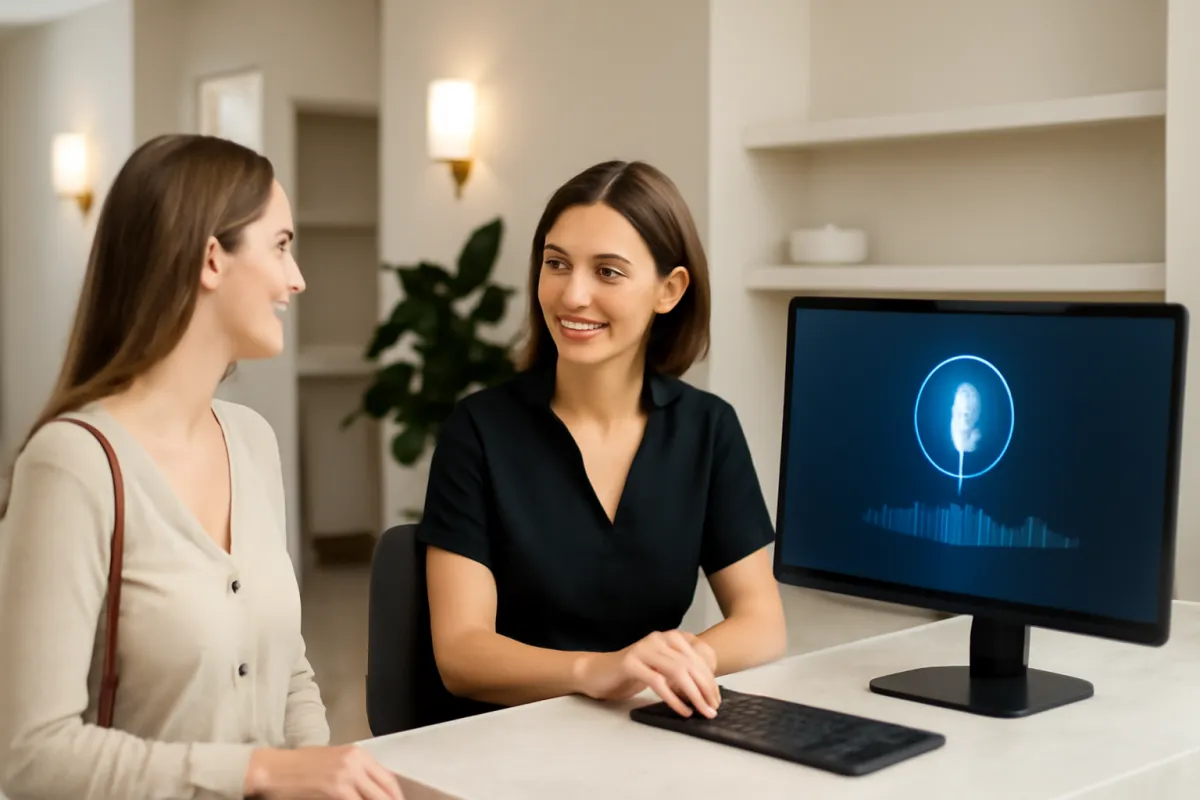
A missed call at a med spa is rarely just a missed call. It may be a prospective client comparing providers for Botox, laser hair removal, body contouring, or a skin consultation. If nobody answers promptly, that person can move to the next clinic before your team has time to call back.
An AI receptionist for med spa businesses helps solve this problem by answering routine calls, collecting lead information, booking eligible appointments, and routing sensitive requests to staff. Unlike a basic voicemail box or answering service, a properly configured AI voice agent for call handling and booking can follow your clinic’s specific workflows while integrating with the systems your team already uses.
The goal is not to remove the human touch from aesthetic care. It is to make sure prospective and existing clients receive a timely, professional response while your providers and front-desk staff focus on the people in the clinic.
What Is an AI Receptionist for a Med Spa?
A med spa AI receptionist is a voice-based automation system that can answer incoming calls and carry on a natural conversation. It can be configured around your services, hours, locations, booking policies, promotions, and escalation rules.
Depending on the setup, the receptionist may be able to:
- Answer calls during business hours, after hours, or during overflow periods
- Identify whether the caller is a new lead or an existing client
- Explain nonclinical service information approved by the practice
- Collect names, contact details, treatment interests, and scheduling preferences
- Book consultations or approved appointment types
- Reschedule or cancel appointments according to clinic policy
- Send confirmation and follow-up messages
- Transfer urgent, clinical, billing, or dissatisfied-client calls to the right person
- Record call outcomes in a CRM or connected lead-management system
This makes the technology more capable than a simple phone menu. However, it should not diagnose conditions, determine medical eligibility, promise treatment outcomes, or replace a licensed provider’s consultation.
Where Med Spas Commonly Lose Phone Leads
Med spa teams often manage incoming calls while checking in clients, processing payments, preparing treatment rooms, and supporting providers. Even an excellent receptionist cannot always answer every call immediately.
Lead leakage commonly occurs when calls arrive:
- Before opening, after closing, or on weekends
- While the front desk is helping an in-person client
- During promotions that produce a sudden increase in inquiries
- When a caller wants a quick answer before deciding whether to book
- When voicemail messages are incomplete or difficult to prioritize
- Across multiple locations with different schedules and services
Speed matters because many aesthetic clients are shopping among several clinics. A caller may not leave a voicemail, and a callback several hours later may arrive after the client has already booked elsewhere. Med spa call answering AI provides an immediate first response without forcing the clinic to keep extra staff available for every possible call spike.
High-Value AI Receptionist Workflows for Med Spas
New consultation inquiries
A prospective client calls and asks about microneedling. The AI can explain that treatment suitability and final recommendations require a consultation, collect the caller’s primary concern, identify the preferred location, and offer available consultation times. It can then send a confirmation and add the inquiry to the clinic’s lead pipeline.
The workflow should use carefully approved language. It can explain general service categories and the clinic’s consultation process, but it should avoid making clinical claims or deciding whether the person is a suitable candidate.
Appointment booking and rescheduling
Med spa appointment booking often involves more than choosing an open time. The system may need to account for treatment type, provider, room or equipment availability, appointment duration, deposits, and new-client requirements.
A well-designed integration can offer only valid appointment options and follow clinic rules. For complex treatments, the AI may book an initial consultation rather than the procedure itself. Existing clients can be authenticated using an approved process before appointment information is discussed or changed.
After-hours and overflow coverage
An aesthetic clinic AI receptionist can answer routine inquiries when the front desk is unavailable. For example, a Friday-night caller interested in injectables could receive basic information and schedule a consultation instead of waiting until Monday.
During busy hours, the system can also provide overflow coverage. Calls that require empathy, judgment, or clinical knowledge should still be transferred or assigned to a staff callback queue.
Frequently asked questions
The receptionist can handle approved questions about parking, locations, hours, accepted payment methods, membership basics, consultation policies, and pre-appointment logistics. It may also explain that pricing depends on treatment plans when a fixed answer would be misleading.
Every answer should come from a clinic-approved knowledge base. The system should not improvise treatment instructions or present promotional language as medical guidance.
Lead follow-up and CRM updates
The call itself is only one part of the client journey. A caller who is interested but not ready to book may need a text with a consultation link, a reminder, or a staff follow-up task. Connecting voice automation with a done-for-you AI marketing automation system can keep call outcomes, messages, pipeline stages, and follow-up activity coordinated.
For example, a lead who asks about body contouring but declines the available times can be tagged for staff review rather than disappearing into a general voicemail inbox.
What the AI Should Escalate to a Human
Clear boundaries protect both the client experience and the practice. An AI receptionist should immediately follow the clinic’s escalation workflow for:
- Possible adverse reactions or post-treatment complications
- Requests for diagnosis, medical advice, or treatment eligibility
- Emergency language or signs that immediate help may be needed
- Complaints, refund disputes, or emotionally sensitive conversations
- Prescription, medication, or medical-record questions
- Requests outside the approved knowledge base
- Callers who repeatedly request a staff member
Emergency messaging must be designed with the clinic’s medical and legal advisers. The AI should never create the impression that it is an emergency service or clinical provider.
Privacy, Consent, and Responsible Call Handling
Med spas can operate at the intersection of consumer aesthetics and healthcare. Applicable privacy obligations depend on the business structure, services, systems, and information being handled. Practices subject to HIPAA should review vendors, data flows, storage, access controls, and business associate agreement requirements.
The U.S. Department of Health and Human Services provides an authoritative overview of the HIPAA Privacy Rule. Clinic leadership should also obtain appropriate legal and compliance guidance for call recording, automated communications, consent, and state-specific requirements.
Practical safeguards include collecting only necessary information, restricting access by staff role, setting retention policies, documenting escalation rules, and telling callers when they are interacting with an automated assistant. Compliance should be evaluated during system design, not added as an afterthought.
How to Evaluate the Potential Return
An AI receptionist is most useful when it addresses a measurable operational problem. Rather than relying on generic promises, establish a baseline before launch.
Review metrics such as:
- Total inbound calls and percentage answered by staff
- Calls arriving outside normal business hours
- Voicemails that receive a successful callback
- Qualified inquiries that schedule consultations
- Average time from inquiry to first response
- Appointments requiring correction because of booking errors
- Staff time spent answering repetitive questions
- No-shows, cancellations, and rescheduling patterns
After implementation, compare results while accounting for seasonality, promotions, staffing changes, and advertising volume. The financial value will vary based on call volume, consultation quality, booking rules, treatment mix, and the clinic’s ability to convert consultations into appropriate services.
How to Implement an AI Receptionist for Med Spa Operations
1. Audit calls and front-desk workflows
List the most common reasons people call, where calls are lost, which requests can be automated, and which must remain human-led. Review real call notes or recordings when legally available and appropriately handled.
2. Define booking rules
Document which appointments the AI can book, required intake details, provider and equipment constraints, deposits, cancellation policies, buffer times, and situations requiring approval. Ambiguous scheduling rules lead to poor automation.
3. Build an approved knowledge base
Create concise answers for services, hours, locations, consultations, promotions, preparation basics, and payment policies. Have clinical leadership review any content touching treatment, safety, or candidacy.
4. Connect the operating systems
Integrate the phone workflow with the appropriate calendar, CRM, forms, messaging tools, and staff notifications. If direct scheduling integration is unavailable, the AI can collect preferences and create a prioritized callback task rather than pretending an appointment is confirmed.
5. Test realistic and difficult calls
Test accents, background noise, interruptions, vague requests, multiple services, unavailable appointment times, upset callers, clinical questions, and requests for a person. Confirm that transfers and fallback workflows work outside office hours.
6. Launch in phases
Many clinics start with after-hours or overflow calls before expanding to primary call handling. Review transcripts, call outcomes, booking accuracy, and client feedback. Update scripts and rules as services, staffing, and promotions change.
Choosing a Done-for-You Partner
A med spa does not need another disconnected software subscription that staff must configure and monitor alone. Look for a partner that can map workflows, build integrations, test conversations, train the team, and improve the system after launch.
Ask potential providers how they handle booking conflicts, clinical questions, human transfers, data access, call disclosure, reporting, and failures in connected software. Also verify who owns the phone number, workflow assets, and business data.
The Digital Success builds done-for-you growth and automation systems that can connect AI voice agents with CRM workflows, lead follow-up, funnels, websites, marketing automation, and paid advertising. This broader approach helps ensure that answered calls become visible, organized opportunities rather than isolated conversations.
Frequently Asked Questions
Can an AI receptionist book med spa treatments?
It can book approved appointment types when connected to a compatible scheduling system and given precise rules. Many clinics limit direct booking to consultations while routing procedures that require clinical review to staff.
Will callers know they are speaking with AI?
Transparent disclosure is a sound practice and may be required depending on the workflow and jurisdiction. The introduction should be clear without making the conversation awkward.
Can it replace the front desk?
It is better viewed as front-desk support. AI can handle repetitive and time-sensitive tasks, while staff manage clinical concerns, complex scheduling, relationship-building, and sensitive situations.
Can a med spa AI receptionist answer calls after hours?
Yes. After-hours coverage is a common use case. The system can answer general questions, capture leads, book eligible consultations, and trigger an on-call or next-business-day workflow.
How long does implementation take?
The timeline depends on workflow complexity, scheduling integrations, compliance review, knowledge-base preparation, and testing. A responsible provider should scope these elements before proposing a launch plan.
Turn More Calls Into Organized Client Opportunities
An AI receptionist can help a med spa respond faster without sacrificing the boundaries required in an aesthetics and healthcare environment. The strongest systems do more than answer the phone: they follow approved scripts, respect booking constraints, document outcomes, coordinate follow-up, and bring staff into the conversation at the right time.
Start by identifying where calls are currently lost and which repetitive workflows create the most pressure. From there, build a focused first version, test it carefully, and improve it using real operational feedback.
Put the ideas to work.
We can map the right system for your business.