
AI Receptionist for Plumbing Companies: Capture More Calls and Book More Jobs
September 07, 2026
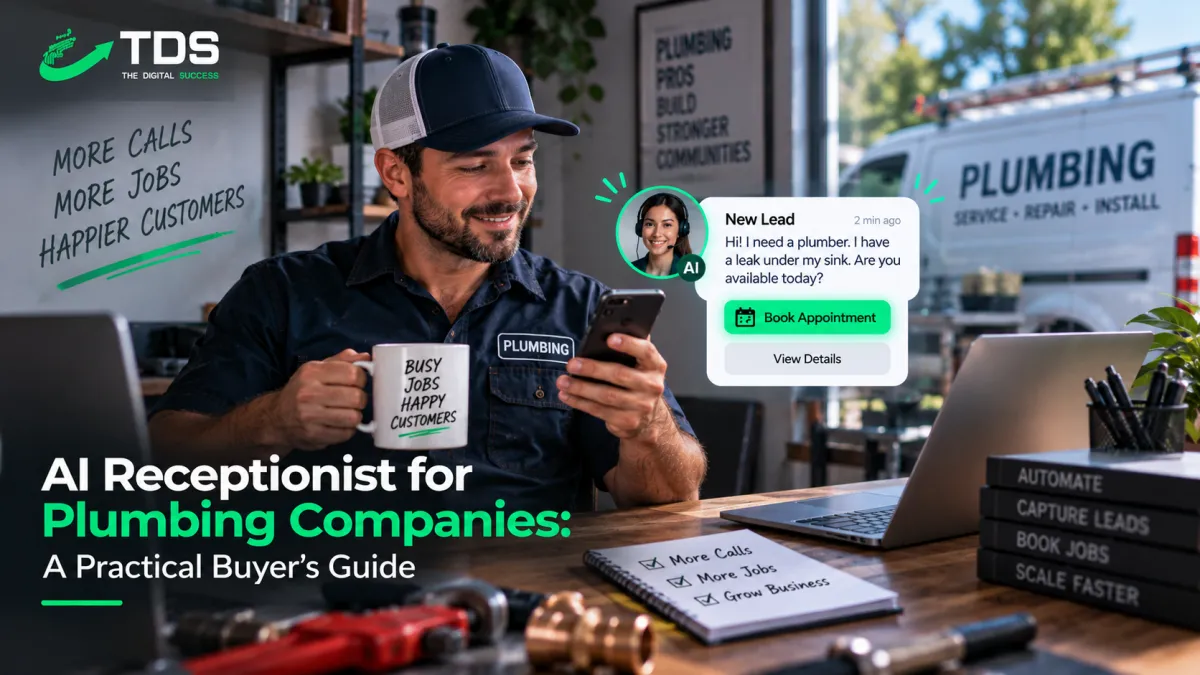
When a homeowner has a burst pipe, backed-up sewer line, or failed water heater, they rarely leave several voicemails and wait patiently. They call the next plumber. An AI receptionist for plumbers helps your company answer those high-intent calls immediately, collect the right details, and move qualified customers toward booking or dispatch—even when your team is busy, after hours, or in the field.
The goal is not simply to answer every call. It is to create a reliable front-desk workflow that understands plumbing requests, follows your service rules, and sends accurate information to the people responsible for scheduling and dispatch.
What Is an AI Receptionist for Plumbers?
A plumbing AI receptionist is a voice-based system that answers incoming calls using natural conversation. It can greet callers in your company’s name, ask why they are calling, collect contact and service details, answer approved questions, and take the next action based on your instructions.
Depending on the setup, that next action may include:
- Booking an available service appointment
- Transferring an urgent call to an on-call technician or dispatcher
- Creating a new lead in your CRM
- Sending an internal notification with a call summary
- Texting the customer an appointment confirmation
- Routing existing customers to the correct department
- Taking a message when a human handoff is unavailable
A properly configured AI voice receptionist for service businesses acts as the first layer of your call-handling process. It does not need to replace every office interaction. It can handle repetitive intake and booking while escalating calls that require judgment, empathy, or technical expertise.
Why Plumbing Companies Lose Valuable Calls
Plumbing businesses face a call-handling challenge that many ordinary offices do not. Demand is often urgent, unpredictable, and concentrated around weather events, evenings, weekends, or local emergencies. Meanwhile, owners and technicians may be driving, working in crawl spaces, speaking with customers, or handling noisy equipment.
Common breakdowns include calls ringing too long, incomplete voicemail messages, office staff juggling several conversations, and after-hours services collecting information without following the plumber’s actual dispatch rules. Even answered calls can become lost opportunities if nobody records the service address, property type, urgency, or source of the lead.
Plumbing call automation addresses these gaps by applying a consistent intake process to every call. Instead of relying on a caller to leave a useful voicemail, the system asks specific questions and records structured answers.
High-Value Workflows for a Plumbing AI Receptionist
1. Emergency call triage
The receptionist can ask whether water is actively flowing, sewage is backing up, the issue affects the entire property, or the caller can shut off the water. Based on your rules, it can label the request as urgent and transfer it to your on-call contact.
This workflow needs careful boundaries. The AI should not diagnose hazardous conditions or make promises about arrival times unless those times come directly from a live scheduling system. For gas odors, fire, electrical hazards, or other immediate safety threats, your script should direct callers to leave the area and contact the appropriate emergency service or utility.
2. Routine appointment booking
Plumbing appointment booking AI can schedule requests such as faucet repairs, toilet installations, garbage disposal problems, water heater maintenance, and plumbing inspections. It can check approved appointment windows, gather the service address, and send a confirmation without requiring office staff to re-enter the information.
3. New customer qualification
Not every call fits your operation. The system can confirm whether the property is inside your service area, whether you serve residential or commercial buildings, and whether the requested job matches your services. This helps prevent your dispatcher from spending time on calls involving unsupported locations or work you do not perform.
4. Overflow and after-hours coverage
A plumber answering service AI can answer when your office team is already on another call or when the office is closed. Your rules can change by time of day: book routine work during business hours, transfer qualifying emergencies at night, and collect messages for billing or vendor inquiries.
5. Call summaries and follow-up
After each conversation, the system can send a concise summary to your CRM or team. A useful summary might include the caller’s name, phone number, address, problem, urgency, preferred appointment window, property type, and whether a transfer succeeded. Automated text or email follow-up can then confirm the next step.
Example: How a Plumbing Call Can Be Handled
Imagine a homeowner calls at 8:15 p.m. and says water is leaking from the ceiling below an upstairs bathroom. The AI receptionist confirms the caller’s name, callback number, address, and ZIP code. It asks whether water is actively flowing and whether the homeowner has located the main shutoff valve.
Because the address is inside the company’s emergency service area and the problem meets its urgent-call criteria, the system attempts to transfer the caller to the on-call dispatcher. It simultaneously creates a lead and sends the dispatcher a summary. If the transfer is not answered, the AI explains the approved next step, records the message, and triggers the backup notification workflow.
For a different caller requesting a non-urgent kitchen faucet replacement, the receptionist offers available appointment windows and books the visit. Both conversations follow different paths because they are governed by the plumbing company’s operating rules—not a generic call script.
Features to Evaluate Before Choosing a System
Commercial value depends more on implementation than on how human the demo sounds. Evaluate whether the platform and provider can support:
- Natural interruption handling: Callers should be able to clarify or correct information without restarting.
- Custom service-area rules: Routing should reflect the ZIP codes, cities, or counties you actually cover.
- Calendar integration: Availability must reflect the correct technicians, job types, and scheduling windows.
- CRM synchronization: New and existing customer records should be matched whenever practical.
- Reliable human transfer: The workflow needs primary and backup contacts, plus a plan for unanswered transfers.
- Spam and non-customer handling: Vendor calls, solicitations, and robocalls should not flood your sales pipeline.
- Conversation reporting: Managers need call outcomes, summaries, recordings where lawful, and escalation visibility.
- Multilingual options: If relevant to your market, confirm the supported languages and test them with real plumbing terminology.
ROI Considerations Without Guesswork
An AI receptionist should be measured against operational outcomes, not novelty. Begin with your current call data: total inbound calls, unanswered calls, after-hours calls, booking rate, average time to respond, and the number of leads that never receive follow-up.
Then compare those baselines with outcomes such as qualified appointments booked, successful transfers, complete customer records, reduced manual data entry, and faster response. Job value varies significantly between a minor repair and a sewer replacement, so avoid evaluating the system only by call volume.
Also account for mistakes. Review calls where the system selected the wrong intent, offered an unsuitable time, created a duplicate contact, or failed to escalate an emergency. A strong implementation includes ongoing review and script refinement rather than a one-time launch.
How to Implement an AI Receptionist for Plumbers
Step 1: Map your real call categories
List the reasons people call, including emergency service, routine repair, estimates, existing appointments, warranties, billing, employment, vendors, and requests outside your service area. Identify the correct outcome for each category.
Step 2: Define booking and dispatch rules
Document business hours, after-hours coverage, emergency criteria, service locations, excluded job types, appointment windows, transfer contacts, and backup procedures. Be explicit about what the receptionist may and may not promise.
Step 3: Connect the operating systems
Integrate the receptionist with your CRM, calendar, notifications, and follow-up tools. This is where broader done-for-you growth systems from The Digital Success can connect call intake with lead tracking, marketing, and customer communication rather than leaving the receptionist as a standalone tool.
Step 4: Test realistic plumbing conversations
Test noisy callers, unclear addresses, repeat customers, tenants, landlords, commercial properties, multiple issues, unsupported locations, angry customers, and failed transfers. Have technicians and dispatchers review the language because they know where intake errors create problems.
Step 5: Launch with monitoring
Start with a controlled use case, such as overflow or after-hours calls. Review transcripts and outcomes frequently, then expand once booking, routing, and escalation are reliable.
Step 6: Build the follow-up layer
The receptionist creates more value when missed transfers, unbooked estimates, and future appointments receive organized follow-up. A done-for-you AI marketing automation system can connect call outcomes to CRM stages, reminders, confirmations, and lead-nurture workflows.
Common Mistakes to Avoid
- Using one generic script for emergency, routine, billing, and vendor calls
- Allowing bookings without accurate calendar or service-area controls
- Failing to create a backup path when a live transfer goes unanswered
- Giving the AI permission to estimate prices or diagnose repairs without approved rules
- Ignoring state-specific call-recording consent requirements
- Sending automated marketing calls or texts without reviewing applicable consent rules
- Launching without regularly reviewing calls and correcting failure patterns
Companies should clearly disclose automated interactions when appropriate, protect customer data, and consult qualified legal counsel regarding call recording, texting, and outbound communication requirements. The Federal Communications Commission’s consumer guidance on robocalls and texts is a useful external compliance reference.
Frequently Asked Questions
Can an AI receptionist book plumbing appointments?
Yes. It can book approved job types when connected to accurate calendar availability and scheduling rules. Complex projects may still need an estimator or dispatcher.
Can it handle emergency plumbing calls?
It can identify predefined urgency indicators, collect essential details, and attempt a live transfer. It should not replace emergency services, provide unsafe instructions, or guarantee technician arrival times.
Will callers know they are speaking with AI?
The greeting can transparently identify the assistant while still sounding professional and conversational. Clear disclosure also helps set appropriate expectations.
Does it replace an office receptionist?
Not necessarily. Many plumbing companies use AI for overflow, after-hours intake, repetitive qualification, and booking while staff handle complex customer issues and dispatch decisions.
What should a plumbing company prepare before setup?
Prepare service areas, business hours, job categories, emergency definitions, booking rules, frequently asked questions, transfer contacts, escalation paths, and CRM requirements. The quality of these inputs directly affects the call experience.
Turn More Plumbing Calls Into Organized Opportunities
An AI receptionist can give a plumbing company consistent call coverage without forcing technicians or owners to interrupt every job. The best results come from combining natural conversation with accurate dispatch rules, calendar access, CRM updates, and human escalation.
Before choosing a system, map your current call workflow and identify exactly where leads are lost. Then build the automation around how your plumbing business actually operates. That approach turns AI from a basic answering tool into a practical part of customer service, scheduling, and growth.
Put the ideas to work.
We can map the right system for your business.