
AI Receptionist for Plumbing Companies: A Practical Guide to Smarter Call Handling
September 07, 2026
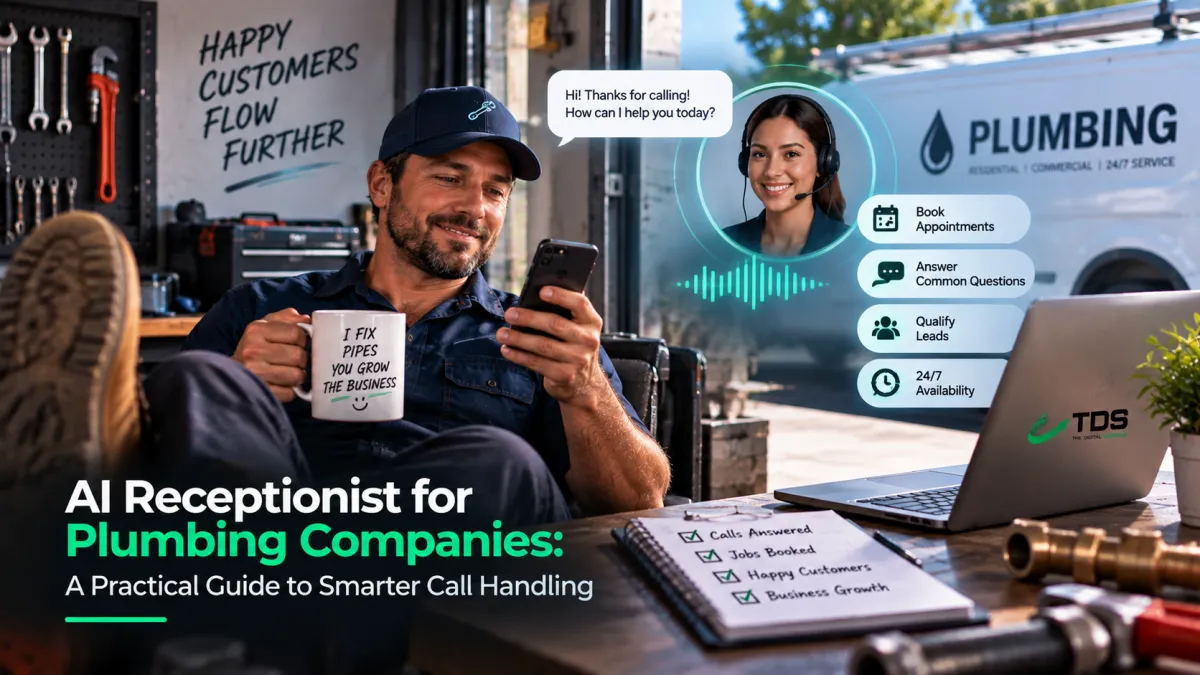
When a homeowner has a burst pipe, clogged drain, or failed water heater, they rarely leave several voicemails and wait patiently. They call the next plumbing company. An AI receptionist for plumbers helps prevent those high-intent calls from going unanswered by responding immediately, collecting job details, and booking or routing the caller based on your rules.
This is not simply a recorded menu or generic answering service. A properly configured AI voice receptionist for call handling and booking can have a natural conversation, identify the service needed, check availability, and document the call in your business systems. Here is what plumbing contractors should know before investing.
Why Plumbing Companies Struggle With Call Handling
Plumbing calls are unpredictable. Office staff may be helping another customer, technicians may be under a sink, and after-hours calls may arrive when no dispatcher is available. Advertising can create additional call volume, but spending more on leads does not help when nobody answers.
Plumbing companies also receive calls that require very different responses:
- A homeowner reporting active flooding needs immediate escalation.
- A landlord may want to schedule service for a tenant.
- A customer with a slow drain may accept the next available appointment.
- A caller may only want an estimate for a future remodel.
- An existing customer may be asking about an arrival window or invoice.
- A solicitor or out-of-area caller may not be a viable lead.
A traditional voicemail treats these calls almost identically. Plumbing call automation can separate them, gather the right information, and trigger an appropriate next step.
What an AI Receptionist for Plumbers Can Do
A plumbing AI receptionist acts as the first conversational layer between the caller and your team. Its responsibilities should reflect how your company actually schedules and dispatches work rather than relying on a one-size-fits-all script.
Answer calls during busy periods and after hours
The AI can answer when employees are unavailable, during lunch, on weekends, or after normal office hours. Some companies use it as the primary first response, while others use it only for overflow and missed-call coverage.
Identify the customer and service request
The receptionist can collect the caller’s name, phone number, service address, property type, and reason for calling. It can also ask useful follow-up questions, such as whether water is actively leaking, whether the main shutoff is accessible, or whether the caller owns or manages the property.
Classify urgency without making unsafe claims
An AI receptionist should not diagnose plumbing failures or promise that a technician will arrive immediately. It can, however, listen for predefined conditions and escalate them. For example, active flooding, sewage backup, or no water at a commercial property may trigger a transfer or urgent dispatcher notification.
Book eligible appointments
With calendar and CRM access, plumbing appointment booking AI can offer approved time windows and create appointments. Booking rules can account for service area, technician availability, job category, business hours, and whether the request requires manual review.
Create structured records and notifications
Instead of leaving staff with a long recording, the system can provide a call summary and populate relevant CRM fields. It can then alert the office by email, text, or an internal notification according to the urgency level.
A Practical Plumbing Call Automation Workflow
Consider a homeowner who calls at 7:30 p.m. because water is collecting below a kitchen sink. A useful workflow might look like this:
- Immediate response: The AI answers using the plumbing company’s name and explains that it can help collect details or schedule service.
- Contact verification: It confirms the caller’s name, callback number, service address, and ZIP code.
- Service-area check: The system verifies that the address falls within an approved territory.
- Urgency questions: It asks whether water is actively flowing, whether the shutoff has been used, and whether there are electrical or safety concerns.
- Routing decision: Based on company rules, it transfers the call to the on-call technician, sends an urgent alert, or offers the next available appointment.
- CRM update: It creates or updates the contact, records the service category, saves a summary, and assigns a follow-up task.
- Confirmation: If an appointment is booked, the customer receives approved confirmation and preparation instructions.
The workflow should not imply that the AI is a licensed plumber. If a caller reports gas odors, electrical hazards, severe flooding, or another dangerous condition, the script should direct the person to follow appropriate emergency procedures and escalate according to company policy.
Where a Plumber Answering Service AI Creates Value
The strongest business case is usually not reducing headcount. It is improving response consistency while allowing office employees and technicians to focus on work that requires judgment.
Capturing calls generated by advertising
Paid search, local campaigns, direct mail, and referrals can all produce calls outside convenient office hours. Fast response helps the company make better use of demand it already paid or worked to generate.
Reducing repetitive office work
Staff members often repeat the same intake questions dozens of times. Automating initial data collection gives them a cleaner record to review and reduces back-and-forth caused by incomplete voicemails.
Supporting multiple service areas or branches
Companies serving several cities can route leads by ZIP code, service type, or branch. The AI can also avoid booking jobs in excluded areas or for services the company does not provide.
Following up with unbooked callers
Not every qualified caller schedules during the first conversation. When connected to a CRM and approved messaging workflows, the system can create a follow-up task rather than allowing the opportunity to disappear. This connection is part of a broader done-for-you AI marketing automation system that coordinates call intake, lead tracking, reminders, and customer communication.
How to Evaluate Cost and Potential ROI
Do not judge a solution only by its monthly fee or the number of calls it can answer. Compare it with the operational cost of missed opportunities, interrupted technicians, after-hours coverage, and manual intake.
A practical evaluation can use this framework:
- How many inbound calls currently go unanswered or reach voicemail?
- How many callers are qualified prospects versus existing customers or irrelevant inquiries?
- What is the average gross profit range for the types of jobs being missed?
- How much employee time is spent answering, documenting, and routing routine calls?
- Does the system improve booking speed and record completeness?
- What software, usage, setup, monitoring, and maintenance costs are involved?
Estimate value using your own call logs and job data. Avoid vendors that guarantee a fixed revenue result without understanding your service area, capacity, average job value, seasonality, and close rate.
Features Plumbing Contractors Should Require
Before choosing an AI receptionist, confirm that it supports the operational details that matter to your company:
- Natural conversations that handle interruptions and common homeowner terminology
- Custom emergency and after-hours escalation rules
- Service-area, job-type, and availability checks
- CRM, calendar, phone, and notification integrations
- Warm transfer or human takeover options
- Call recordings, summaries, transcripts, and outcome tracking where legally permitted
- Configurable disclosures and consent procedures
- Testing tools and ongoing script refinement
- Fallback behavior when an integration or calendar is unavailable
The system also needs to recognize its limits. Pricing disputes, unusual commercial projects, warranty questions, and frustrated customers may require a person. Good automation makes that handoff easy.
Implementation Plan for an AI Receptionist for Plumbers
1. Review real calls
Start with recent call recordings, receptionist notes, and missed-call reports. Identify common service requests, frequent questions, high-value call types, and situations that require escalation.
2. Define booking and routing rules
Document your service area, operating hours, appointment windows, excluded job types, emergency process, and transfer contacts. Decide exactly what the AI may book without approval.
3. Connect the operating systems
Integrate the phone number, CRM, scheduling calendar, notifications, and follow-up workflows. A provider of done-for-you growth and AI business automation systems can map these connections so call data does not remain isolated from sales and service operations.
4. Test realistic scenarios
Test routine bookings, out-of-area callers, active leaks, rescheduling requests, existing customers, background noise, interruptions, and unavailable appointment times. Include unusual wording that homeowners commonly use.
5. Launch with controlled coverage
Many businesses begin with after-hours or overflow calls. Review transcripts and outcomes frequently, then expand coverage after the routing and booking rules perform reliably.
6. Measure operational outcomes
Track answered calls, qualified leads, booked appointments, transfers, abandoned calls, booking errors, and requests requiring human help. Use those findings to refine prompts and workflows rather than treating implementation as a one-time project.
Common Mistakes to Avoid
- Using a generic script: Plumbing calls require service-specific questions and urgency rules.
- Automating every conversation: Some callers need empathy, negotiation, or technical judgment from a person.
- Allowing unrestricted calendar access: Booking logic should protect drive time, technician capacity, and service-area boundaries.
- Ignoring system failures: Define what happens if the CRM, calendar, transfer destination, or internet connection is unavailable.
- Skipping compliance review: Call recording, automated texts, outbound calling, and consent requirements can vary. Businesses can consult the FCC guidance on telemarketing and robocalls and obtain qualified legal advice for their specific practices.
- Failing to monitor quality: Customer language, services, staffing, and schedules change. The system needs ongoing review.
Frequently Asked Questions
Can an AI receptionist book plumbing appointments?
Yes, when it is integrated with an approved calendar and given clear rules for service areas, job types, appointment windows, and escalation. Complex jobs can be held for manual review.
Can it handle plumbing emergencies?
It can recognize predefined urgent conditions, collect details, and transfer or alert an on-call employee. It should not diagnose a problem, provide unsafe instructions, or guarantee emergency response times.
Does an AI receptionist replace office staff?
It is generally more effective as a support layer. It handles repetitive intake and overflow while employees manage exceptions, customer relationships, dispatch decisions, and sensitive conversations.
Can a plumbing company keep its existing phone number?
Often, yes. Calls may be forwarded to the AI under specific conditions or routed through an updated phone setup. The exact approach depends on the current carrier and call flow.
What should a plumbing company automate first?
Start with missed calls, after-hours intake, basic lead qualification, and appointment requests. Add more advanced routing and follow-up only after the initial workflow has been tested with real calls.
Build Around the Customer Experience
An AI receptionist works best when it reflects how the plumbing company actually serves customers. Clear scripts, controlled scheduling, reliable human handoffs, and connected CRM workflows matter more than flashy demonstrations. Begin with a narrow call-handling problem, test thoroughly, and expand based on documented results.
Put the ideas to work.
We can map the right system for your business.