Done-for-You Funnels and Websites for Small Businesses: What Should Be Included?
September 15, 2026
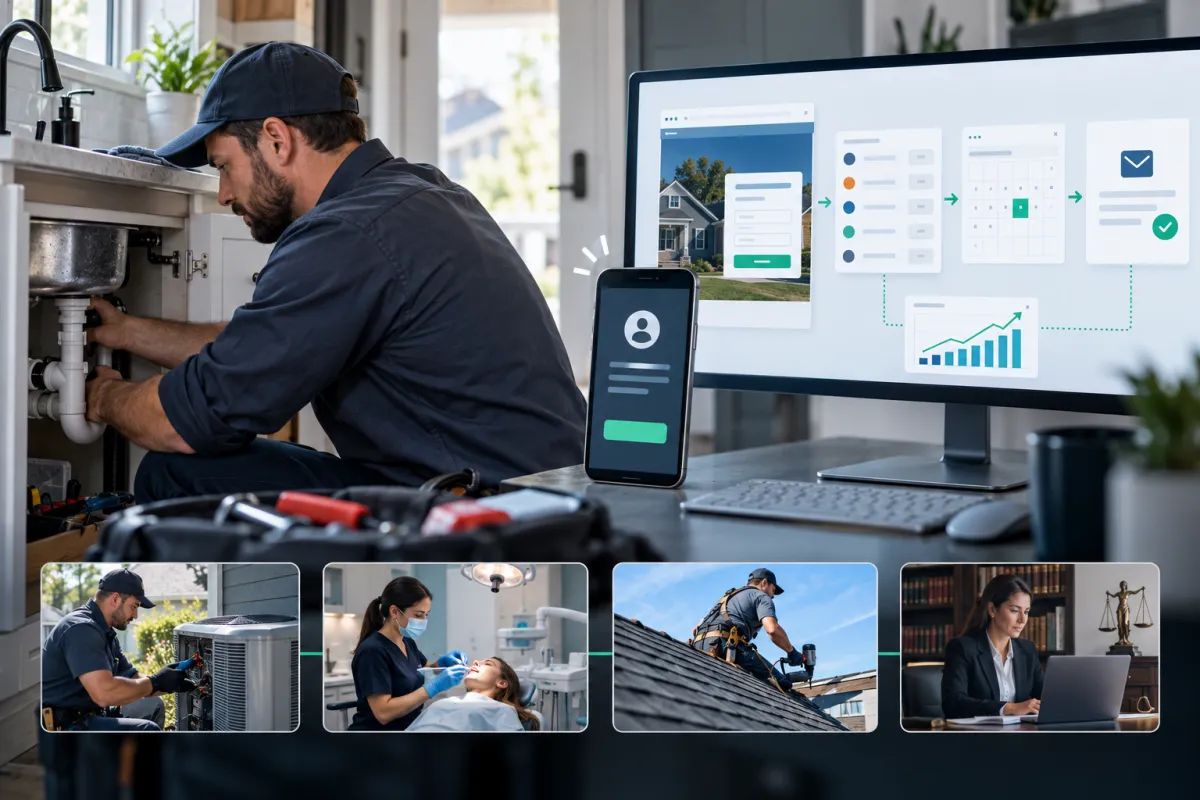
A professional website can make a small business look credible, but appearance alone does not consistently produce leads. To support growth, the site also needs clear messaging, focused calls to action, reliable tracking, and a practical process for following up with prospects.
That is the purpose of done for you funnels and websites: combining strategy, design, copy, technology, and automation into a working customer acquisition system. Before hiring a provider, however, small-business owners should understand what a complete service includes—and what may be missing from a design-only proposal.
What Are Done-for-You Funnels and Websites?
A website and a funnel have related but different jobs. A small-business website gives visitors multiple paths to explore. It may include service pages, an About page, customer reviews, FAQs, contact information, and educational content. It helps people understand the company and decide whether it is trustworthy.
A funnel gives visitors one primary path toward a specific action. That action might be requesting an HVAC estimate, scheduling a dental consultation, submitting details about a legal matter, or booking a home-service appointment. Funnel pages minimize distractions and guide the prospect through a defined sequence.
A complete done-for-you website and funnel system should connect these two assets. The website builds authority and supports organic discovery, while focused landing pages convert traffic from advertisements, email campaigns, search results, referral partners, and social media.
What a Complete Service Should Include
1. Business, Audience, and Offer Strategy
The process should begin before anyone chooses colors or page templates. A provider needs to understand the business model, ideal customers, geographic service area, highest-priority services, sales process, and reasons customers choose the company.
Strategy should also define the offer behind each funnel. “Contact us” is rarely a compelling offer by itself. A plumbing company might invite homeowners to request service, while a roofer could offer an inspection request. A law firm may use a case evaluation form, and a marketing agency might promote an audit or discovery call.
The provider should document the intended visitor, traffic source, conversion action, and follow-up workflow for each campaign. Without these decisions, a landing page is simply another page rather than part of a functioning funnel.
2. Conversion-Focused Site Architecture
A conversion focused website needs an intuitive structure. Visitors should be able to identify what the business does, where it operates, and how to take the next step without searching through confusing menus.
For most service businesses, the scope should account for a homepage, core service pages, About page, contact or booking page, trust-building content, and required policy pages. Businesses serving multiple locations may also need carefully planned location content, but providers should avoid creating thin, repetitive pages merely to target city names.
Mobile usability is especially important. Prospects may be searching from a jobsite, vehicle, waiting room, or home emergency. Buttons, forms, navigation, and phone numbers need to work cleanly on smaller screens.
3. Professional Copywriting
Templates do not replace clear sales messaging. A done for you website should include copywriting or, at minimum, structured copy development—not empty layouts that leave the owner responsible for every headline and paragraph.
Effective copy addresses the visitor’s problem, presents the service in plain language, explains the process, answers common objections, and offers a specific next step. It should reflect how real customers speak rather than relying on vague claims such as “best-in-class solutions.”
Copy should also be tailored to the buying situation. A homeowner with a failed air conditioner needs fast clarity and an obvious service-request option. Someone researching cosmetic treatments or legal representation may require more education, reassurance, and qualification before booking.
4. Dedicated Landing Pages
A small business funnel service should include campaign-specific landing pages rather than sending every visitor to the homepage. Each page should align with the ad, email, keyword, or referral message that brought the prospect there.
A useful landing page service typically covers the headline, benefit-driven content, offer, supporting proof, form or scheduling tool, calls to action, mobile layout, confirmation page, and tracking setup. The confirmation page should tell the lead what happens next instead of displaying a generic “thank you” message.
For example, an electrician running an ad for panel upgrades should direct visitors to a panel-upgrade page—not a general page listing lighting, generators, repairs, and commercial work. Message alignment helps the prospect confirm that they reached the right place.
5. Trust and Proof Elements
Small-business customers often compare several providers. The site should make it easy to evaluate experience and credibility without using exaggerated or unverifiable claims.
Depending on the industry, appropriate elements may include customer testimonials, project photos, team credentials, licenses, service guarantees with clearly stated terms, accepted financing options, professional affiliations, or an explanation of the company’s process. Any review, badge, or certification should be authentic and used with permission.
Proof should appear near decision points—not only on a separate testimonials page that visitors may never open.
6. CRM, Scheduling, and Lead Follow-Up
A form submission is not the end of a funnel. It is the beginning of the sales workflow. The website should route each inquiry to the correct pipeline, notify the appropriate team member, and record the source and requested service.
Useful integrations may include a CRM, calendar, email and text confirmations, internal notifications, qualification fields, and follow-up reminders. Businesses that depend heavily on inbound calls may also connect an AI voice agent for call handling and booking, provided the workflow includes appropriate disclosures, escalation rules, and human handoff options.
Ask whether integrations are included in the initial scope and who is responsible for testing them. A polished form that sends data to the wrong inbox is not a functioning lead system.
7. Analytics and Conversion Tracking
The build should include measurement for meaningful actions such as forms, booked appointments, phone calls, and qualified lead events. Page views alone do not explain whether a funnel is contributing to the business.
Tracking requirements vary by advertising platform and technology stack, but the provider should explain what will be measured, where results can be reviewed, and how lead quality will be assessed. Privacy notices and consent practices should also reflect the tools being used.
The U.S. Small Business Administration provides a useful overview of marketing and sales planning for small businesses, which can help owners connect funnel metrics to broader business goals.
8. Quality Assurance and Launch Support
Before launch, the provider should test the site across common screen sizes and browsers. Quality assurance should cover navigation, forms, calendars, call buttons, confirmation messages, notifications, page titles, image display, spelling, and basic accessibility.
Launch support should also include domain and DNS coordination, analytics verification, redirects when replacing an existing site, and a backup or rollback plan. If an established website is being rebuilt, careless URL changes can disrupt traffic and create broken links.
Website and Funnel Features That Are Often Overlooked
Some proposals focus on page count while overlooking the systems that make those pages useful. Before signing, confirm whether the following are included:
- Original or properly licensed images and graphics
- Basic on-page SEO elements, including page titles and meta descriptions
- Image compression and reasonable performance optimization
- Accessible headings, readable contrast, and descriptive image text
- Spam protection and form-delivery testing
- Calendar rules, service areas, and qualification logic
- CRM field mapping and lead-source attribution
- Legal and privacy-page implementation based on owner-supplied guidance
- Post-launch corrections and a defined support period
- Ownership or transfer terms for the domain, content, designs, and accounts
No provider should give casual legal, accessibility, or regulatory guarantees. Businesses in healthcare, legal services, finance, and other regulated fields should have qualified professionals review relevant claims, consent language, and data-handling practices.
How to Evaluate a Small Business Funnel Service
Do not choose a provider based only on a visually impressive portfolio. Ask how the team approaches strategy, conversion paths, follow-up, and measurement. A capable provider should be able to describe the workflow from first click to booked appointment or sales conversation.
Request a written scope identifying the number and type of pages, copywriting responsibilities, revision process, integrations, tracking events, timeline dependencies, hosting arrangement, maintenance expectations, and account ownership. Also ask what is not included. Photography, custom integrations, paid advertising, advanced SEO, and ongoing optimization may be separate services.
Be cautious if the proposal emphasizes rapid launch but includes no discovery, copy process, tracking plan, or quality assurance. Speed can be useful, but only when the essential strategic and technical work remains intact.
Implementation Plan: From Idea to Working Funnel
- Choose one business objective. Start with a priority service and a measurable action, such as an estimate request or consultation booking.
- Map the customer journey. Identify the traffic source, landing-page message, conversion step, qualification questions, and follow-up owner.
- Gather business assets. Prepare service details, brand files, reviews, photos, credentials, FAQs, policies, and access to required platforms.
- Build the core website and campaign page. Keep navigation simple and give every important page a clear next step.
- Connect the operational workflow. Route the lead into the CRM, trigger appropriate notifications, and define who responds.
- Test the complete journey. Submit forms, schedule appointments, click phone buttons, and verify every message on desktop and mobile.
- Review real lead quality. Use inquiries and sales feedback to improve the offer, questions, copy, and follow-up sequence.
Businesses that want to extend this workflow beyond the initial build can connect the funnel to a broader done-for-you AI marketing automation system for lead nurturing, pipeline updates, and re-engagement. Automation should support the customer experience, not replace necessary human judgment.
Frequently Asked Questions
Is a funnel the same as a website?
No. A website supports broad research and credibility, while a funnel guides a specific audience toward one primary action. Many small businesses benefit from both.
Should copywriting be included in a done-for-you service?
Ideally, yes. Confirm whether the provider writes original copy, edits owner-supplied content, or only inserts text into a template. This distinction can significantly affect the workload and final result.
How many landing pages does a small business need?
There is no universal number. Start with pages tied to priority services, audiences, or campaigns. Additional pages should have a clear purpose rather than being created solely to increase page count.
Who should own the website and funnel assets?
Ownership and portability should be stated in the agreement. Ask about the domain, hosting, CRM account, analytics properties, advertising pixels, design files, copy, and what happens if the relationship ends.
Does a new funnel guarantee more leads?
No. Results depend on the offer, audience, traffic quality, competition, sales process, follow-up speed, and ongoing optimization. A well-built funnel creates a stronger system for capturing and managing demand, but it cannot guarantee demand or sales.
Build a System, Not Just a Set of Pages
The best done-for-you engagement delivers more than attractive design. It connects positioning, copy, landing pages, trust elements, CRM workflows, lead follow-up, analytics, and launch support into one practical system.
Before choosing a provider, compare the full scope against how your business actually acquires and serves customers. When the website, funnel, and follow-up process work together, your team has a clearer foundation for turning attention into qualified conversations.
Put the ideas to work.
We can map the right system for your business.